Work-Integrated Learning
Internship
Placement within an organization with a staff member designated as mentor. Financial remuneration may be included, or a student may earn academic credit or other credentials.
Practicum/Clinical
Involves practice-based work experience under the supervision of a professional. Can be stand-alone or course component for which grade or evaluation is assigned. May or may not be mandatory.
Co-op
Academic program in which curriculum is designed so that the students alternate study and work terms, with paid employment and supervision/mentorship.
Applied Research
Applied Research
Research conducted by a student under faculty guidance in an academic, community or industry setting.
Community-Based Research
Students actively involve community members or those whose lives are affected by the issue in all phases of the research process.
Field Experiences
Students work in an authentic setting to study and apply theoretical knowledge.

Course-Based Learning
Community Service Learning/Community Engaged Learning
Volunteer experience within an external community-based organization in which the student makes a specific contribution to the organization and/or community.
Project-Based Learning
Engages students in finding solutions to business or community-identified problems, often culminating in a final product or presentation.
Simulation/Case-Based Learning
A case or problem used to simulate a particular context or situation where students work to acquire certain skills, knowledge and attitudes to critique or problem-solve.
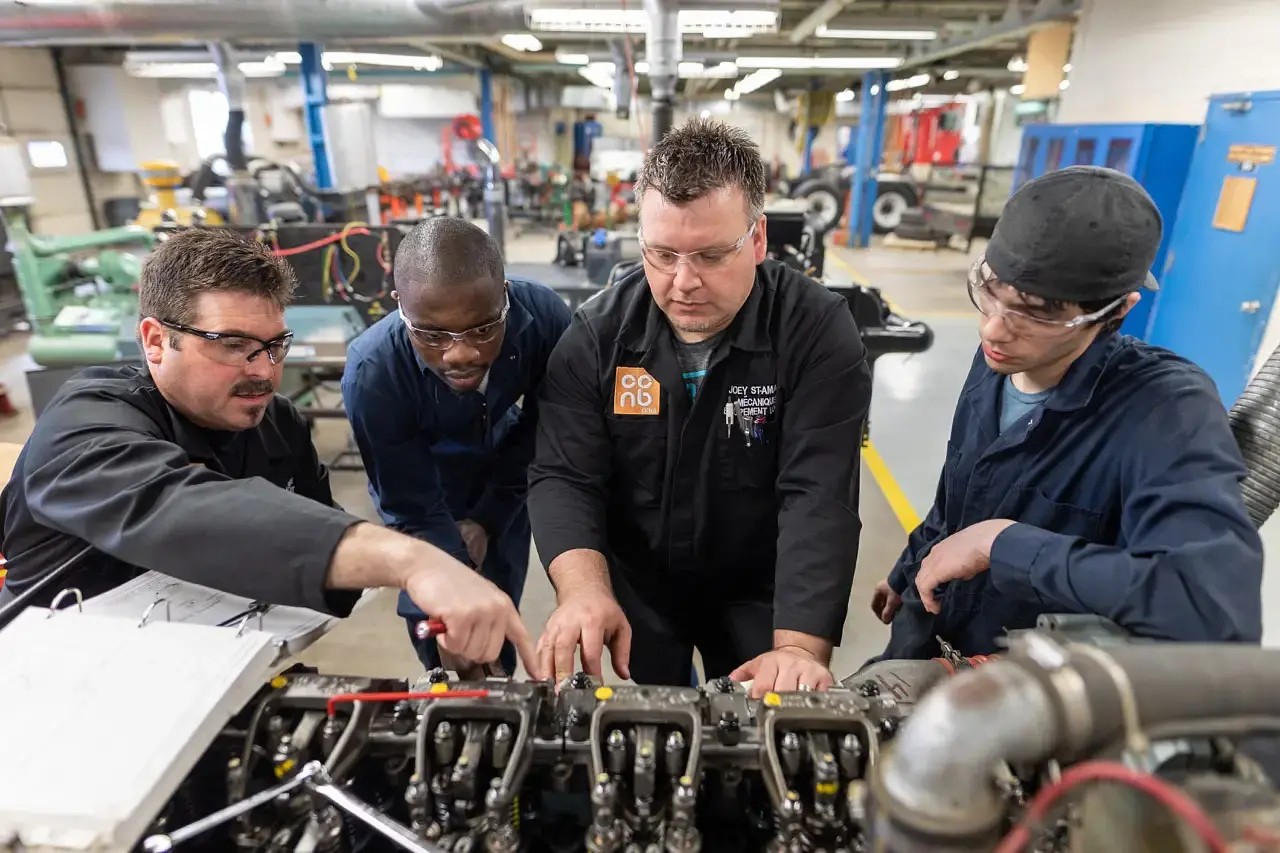
Co-curricular Development: This category may include (but is not limited to) elements such as competitions, showcases, symposia, conferences, events, work-study, or other forms of experiential education that adhere to CEWIL and the National Society for Experiential Education.
How do I get involved?
Visit one of the following pages to get more information about your specific program.